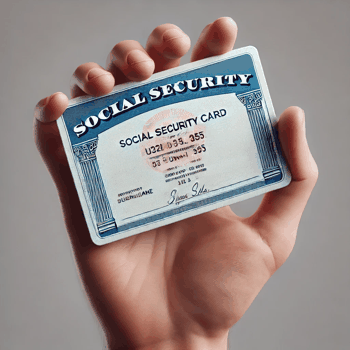
Why would I need Social Security Number (SSN) Trace?
Social Security Number (SSN) Trace is typically used for verification purposes, ensuring that the identity and information are accurate and match publicly available records. Here are some reasons you might need it:
Identity Verification: To confirm the candidate's identity and prevent fraud or misrepresentation.
Background Checks: As part of a comprehensive background screening process to verify past employment, education, or financial reliability.
Compliance Requirements: To meet legal or regulatory obligations, especially in industries like finance or healthcare, where accurate identity verification is critical.
Eligibility Assessment: To validate that the candidate meets specific qualifications or eligibility criteria based on their history.
Risk Mitigation: To reduce the risk of hiring individuals with misrepresented or fraudulent credentials, protecting the organization from potential legal or financial liabilities.
How is the Social Security Number (SSN) Trace conducted?
Conducting a Social Security Number (SSN) Trace typically involves several steps and uses specialized databases and services. Here’s an overview of how it’s done:
1. Collect the Candidate's SSN
• The candidate provides their SSN, usually as part of a job application or onboarding process.
• Proper consent must be obtained before conducting the check in compliance with privacy laws (e.g., the Fair Credit Reporting Act (FCRA)).
2. Submit the SSN to a Background Screening Service
• The employer or screening agency inputs the SSN into a trusted background check service or verification system.
• Examples of providers include major credit bureaus, employment verification companies, or government-authorized platforms.
3. Cross-Check with Databases
• The SSN is matched against a variety of public and private databases, such as:
Social Security Administration (SSA): Verifies whether the SSN is valid and issued to an actual individual.
o Credit Bureaus: This is for identity confirmation and checking for consistency with financial records.
o Utility and Service Providers: Matches addresses and names associated with the SSN.
o Educational Institutions: Verifies education history linked to the SSN.
o Employment Records: Confirms prior employment if reported using the same SSN.
4. Identify Red Flags
• The check looks for inconsistencies or red flags, such as:
The SSN is not being issued or being linked to multiple identities.
o A mismatch in name, date of birth, or other identifying information.
Signs of fraudulent use (e.g., an SSN issued for a deceased individual).
5. Report the Findings
• The service generates a report summarizing the results.
• Any issues or discrepancies are flagged for the employer to review and discuss with the candidate.
Is my consent required for a Social Security Number (SSN) Trace??
Yes, your explicit consent is required before conducting the Social Security Number (SSN) Trace. Under federal laws, such as the Fair Credit Reporting Act (FCRA), employers or organizations must obtain your written permission before performing the background check, especially when it involves sensitive information like criminal history or credit reports. You will be asked to sign an authorization form acknowledging these checks and your rights, including how the information will be used.