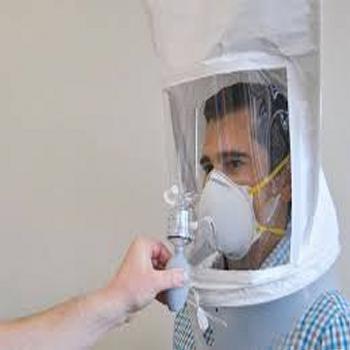
Purpose: The Respirator Fit Test - Qualitative is crucial for verifying that half-mask respirators provide adequate protection by maintaining a proper seal. This testing method is vital for ensuring the wearer is safeguarded against airborne contaminants.
Testing Method:
- This qualitative fit test operates on a pass/fail basis, relying on the wearer’s ability to detect air leaks through sensory perception.
- Suitable for half-mask respirators, including filtering facepieces and elastomeric types.
- The overall fit factor should be 100 or less (calculated as mask particle concentration divided by ambient particle concentration).
Test Procedure:
- The wearer will be exposed to a harmless bitter-tasting agent (Bitrex).
- If the wearer tastes the Bitrex, it indicates a failure in the seal of the respirator.
- A successful test means no leakage was detected, confirming an effective fit.
Importance of Fit: Ensuring a proper fit is crucial for the safety and health of individuals working in environments with hazardous airborne contaminants. Regular qualitative fit testing is a key element of a robust respiratory protection program.
The Respirator Fit Test - Qualitative serves as a straightforward yet effective solution for verifying the integrity of half-mask respirators, enhancing workplace safety and compliance with regulatory standards.
Why would I need a Qualitative Respirator Fit Test?
The Qualitative Respirator Fit Test is required for individuals who:
Use tight-fitting respirators: It ensures that half-mask respirators, including N95 masks, fit correctly and provide adequate protection against airborne hazards.
Work in environments with respiratory hazards: Employees in healthcare, construction, chemical handling, or any field where exposure to dust, fumes, or airborne contaminants is present must undergo fit testing to comply with OSHA’s Respiratory Protection Standard (29 CFR 1910.134).
Require initial and annual fit testing: OSHA mandates that employees be fit-tested before using a respirator for the first time and then annually to ensure the mask continues to fit properly over time.
Have changes in facial features: If an individual’s facial structure changes due to weight fluctuations, surgery, or other reasons, a new fit test is required to confirm that the respirator still fits correctly.
Will the use of glasses or facial hair affect the test results?
Yes, glasses and facial hair can impact the effectiveness of a respirator and the outcome of the fit test:
Glasses: Individuals wearing glasses should ensure the respirator does not interfere with the seal. The fit test will confirm if the mask fits appropriately with the glasses in place.
Facial hair: OSHA requires that employees be clean-shaven in the area where the respirator seals against the face. Facial hair, such as beards or stubble, can compromise the seal and allow contaminants to enter. You may need to shave before the fit test to achieve an adequate seal if you have facial hair.
Proper preparation and adherence to glasses and facial hair guidelines are necessary to pass the test and ensure protection.
Do I need to prepare for the Qualitative Respirator Fit Test?
Yes, there are a few steps to prepare for the fit test:
Avoid eating, drinking, or smoking: Do not eat, drink (except water), smoke, or chew gum for 15–30 minutes before the test, as these activities may affect your sensitivity to the test agent.
Be clean-shaven: If you must use a tight-fitting respirator, ensure you are clean-shaven where the mask seals against your face. Facial hair can interfere with the seal, resulting in a failed fit test.
Bring your glasses or PPE: If you wear glasses, protective eyewear, or other personal protective equipment (PPE) that might interfere with the respirator, bring them to the fit test to ensure they are compatible with the mask.
Following these guidelines will help ensure accurate test results.